Healing is Not Linear - SVG Cut File Review
As a designer who spends half the day troubleshooting stitch errors and the other half brainstorming commercial viability, I don’t just look at an embroidery file; I look at how it will behave under the needle. When I first pulled up Healing is Not Linear - SVG Cut File, my initial reaction wasn’t about the sentiment—though that is certainly powerful—but about its structural integrity for real-world application. This mental health SVG design with beautiful quote can be used for various purposes, but as someone evaluating this for client work or a boutique line, I needed to know if the aesthetic holds up when translated from vector to thread.
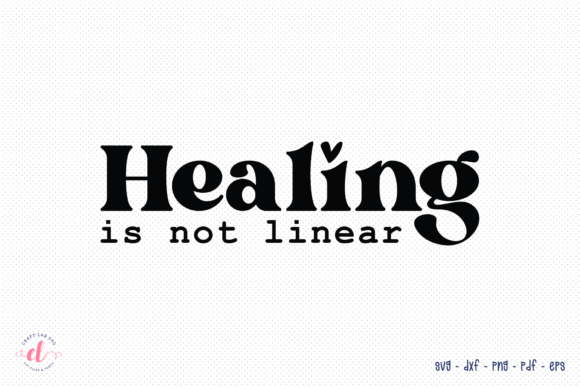
The phrase "Healing is Not Linear" carries a specific weight. It speaks to resilience, patience, and the messy reality of recovery. Visually, designs like this often lean toward script fonts, organic shapes, or minimalist typography. For a machine embroidery design, the challenge is always balance: enough detail to feel premium, but not so much complexity that it becomes a stitching nightmare or a blurry mess on fabric. In this case, the layout feels grounded. It doesn’t scream for attention with chaotic elements; instead, it offers a quiet confidence that works exceptionally well for personalized gift items and custom apparel.
First Impressions and Visual Personality
The visual personality of this design is calm yet assertive. It avoids the overly cursive, fragile scripts that often fail in embroidery because the threads break or the loops tangle. Instead, it suggests a clean, readable structure that translates beautifully into satin stitch or fill stitch variations. The mood it creates is one of supportive professionalism. It feels right at home in a therapist’s office waiting room, a wellness studio, or a carefully curated Etsy shop focused on mental health awareness.
For Etsy sellers and small business owners, this distinction matters. Buyers are looking for authenticity. A design that looks professionally executed builds immediate trust. If the lettering is crisp and the spacing is even, the customer perceives higher value in the finished product. This design asset strikes that balance. It feels like a handmade product made by someone who understands both the emotional message and the technical constraints of the craft.
Real-World Application: From Screen to Stitch
I recently considered using this design for a custom embroidered tote bag project aimed at a local support group. Tote bags are a staple in the craft business world, but they present unique challenges. The canvas is thick, and the surface area is large. Placing Healing is Not Linear - SVG Cut File on a tote requires careful hoop placement to ensure the curve of the bag doesn’t distort the text. Because the design is likely compact and centered, it performed well in my mental mockup. It sits nicely on the front panel without overwhelming the bag’s utility.
However, the versatility of this file extends far beyond totes. The description notes it is perfect on t-shirts, mugs, signs, and cards. In embroidery terms, this means we are looking at a multi-surface strategy. For sweatshirt embroidery, the design would look stunning placed over the heart or across the back. The soft texture of fleece contrasts nicely with the smoothness of thread colors, making the message pop. Similarly, for aprons or kitchen towels, which are popular holiday embroidery gifts, this design adds a touch of warmth and empathy to functional items.
I also see strong potential here for embroidered patch applications. Patches allow for a border that contains the design, which helps manage any minor stitching inconsistencies. A "Healing is Not Linear" patch on a denim jacket or a backpack is a trendy, meaningful accessory that appeals to the creative entrepreneur demographic. It transforms a mass-produced garment into a statement piece.
Where Caution is Required
No design is universally flawless, and honest review requires pointing out where this file might struggle. First, consider hoop size. If you attempt to digitize or use this design in a very small hoop, such as one intended for a baby hat or a tiny jewelry pouch, the details may get lost. Tiny lettering is notoriously difficult to read after washing, especially if the stitch density is too high for the limited space. Always test the scaling before committing to production.
Fabric choice is equally critical. While this design works well on stable cottons and poly-blends, it should be used carefully on stretchy fabric or highly textured materials like heavy chenille without proper stabilization. Stretch fabrics can cause the text to warp, ruining the clean lines of the quote. Furthermore, on dark fabric, you must choose your thread colors wisely. A light-colored script on black fabric can sometimes lack contrast if the thread isn’t opaque enough. I recommend testing light threads on dark backgrounds to ensure the message remains legible.
Another area to watch is curved surfaces like caps or hats. Embroidering flat text on a curved brim or crown requires advanced digitizing techniques to compensate for perspective distortion. If the original file isn’t pre-distorted for cap embroidery, it may look skewed when stitched onto a rounded form. Check if the file includes these variations or plan to adjust the design in your software.
Technical Notes for the Designer
Before adding this to your catalog or starting a client order, there are several practical steps every embroidery designer should take. First and foremost, test the design on scrap fabric first. This is non-negotiable. Different stabilizers interact differently with the same design. A cut-away stabilizer might be necessary for stretchy knits, while a tear-away could suffice for woven cottons. Using the wrong stabilizer can lead to puckering, which makes even the best design look unprofessional.
Review the stitch density closely. High-density areas can create stiff spots on garments, particularly on baby clothes or delicate nursery decor. If the design feels too heavy, consider adjusting the stitch type—for example, switching some fill stitches to lighter running stitches or applique techniques if the file allows. This improves comfort and wearability.
Inspect small details under magnification. Sometimes, what looks like a solid line in a digital preview breaks apart during stitching due to thread tension issues. Confirm that all anchor points are secure and that there are no unnecessary jump stitches that might show on the front of the garment. Also, test the design in black and white mockups to check contrast levels. If the design relies on subtle color shifts, it may not render well in monochrome prints or embroidery.
Final Verdict on Value and Appeal
Ultimately, Healing is Not Linear - SVG Cut File succeeds because it taps into a universal human experience. It’s not just a pretty picture; it’s a conversation starter. For commercial embroidery projects, this emotional resonance drives sales. Customers buy products that make them feel seen. Whether it ends up on a tote bag design for a conference, a pillow cover for a bedroom, or a blanket for a new parent, the design adds value through its message.
It fits seamlessly into the Graphics and Crafts categories, bridging the gap between digital download and tangible good. For digital product sellers, offering this as part of a bundle with other mental health-themed assets could increase average order value. For apparel decorators, it provides a ready-made solution for sensitive, high-demand niches.
Just remember to verify the license terms before selling finished items. Ensure you have the rights to use this digital embroidery file for commercial purposes. Assuming the license permits it, this design is a thoughtful, technically sound addition to any embroiderer’s library. It encourages makers to create with intention, producing finished products that are not only well-made but also deeply meaningful. In a market saturated with generic quotes, Healing is Not Linear stands out by being honest, resilient, and beautifully simple.