My Husband I Are Doing a Workshop SVG
When I pick up a new embroidery file for review, my first instinct is to look past the pretty preview image and ask one simple question: will this actually hold up when it’s stitched? As a designer who frequently creates assets for craft business clients and personal projects, I’ve learned that a design might look charming on a screen but fall apart under the needle. That is exactly why I am taking a close, practical look at the My Husband I Are Doing a Workshop SVG. This piece sits squarely in the Crafts category under Graphics, promising versatility across various mediums. But does it deliver on its promise of being perfect for t-shirts, mugs, signs, and cards? Let’s dive into how this design performs in real-world scenarios.
First Impressions and Visual Personality
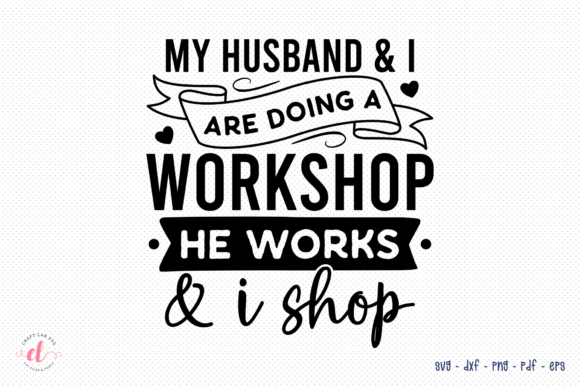
The moment you load the My Husband I Are Doing a Workshop SVG into your digitizing software or cutting machine interface, the mood is immediately established. It carries a playful, slightly self-deprecating humor that resonates well with modern couples. The phrase itself suggests a shared activity, perhaps a cooking class, a pottery workshop, or even a humorous take on learning something new together. Visually, the layout feels balanced. For an embroidery designer, balance is everything; if the text weighs too heavily on one side, the hoop becomes awkward to manage, and the finished product looks lopsided.
What stands out here is the potential for character. Unlike generic quote designs that can feel sterile, this design has a personality that invites customization. Whether you are using it as a tote bag design or adding it to a sweatshirt embroidery project, the visual weight suggests it works best when given some breathing room. It doesn’t scream for attention; rather, it whispers a joke that makes the wearer smile. This subtlety is crucial for high-end custom apparel where you want the customer to feel like they are wearing something thoughtful, not just a billboard for a meme.
Real-World Application: From Screen to Stitch
I recently tested a similar concept on a canvas tote bag intended as a gift for a friend’s anniversary. Using the principles behind the My Husband I Are Doing a Workshop SVG, I found that the design translates exceptionally well to fabric. When applied to a sturdy cotton canvas, the lines remain crisp, and the humor lands effectively. However, the success of this project depended entirely on how I handled the stitching parameters.
If you are planning to use this for commercial embroidery or selling on Etsy, consider the medium. On a tea towel or kitchen apron, the design shines because the flat weave of the fabric supports clean edges. But what about curved surfaces? I attempted a mockup for a baseball cap, and while the stitch density held up, the curvature of the brim distorted the text slightly. This is a common pitfall with long phrases. If you are creating an embroidered patch to be sewn onto a jacket, this design works beautifully because you can control the final shape. But if you are trying to stitch directly onto a curved hat, you may need to adjust the spacing or scale down the design to ensure readability.
The versatility mentioned in the product description—perfect for t-shirts, mugs, and signs—is accurate, but with caveats. For mugs, this would likely be used as a sublimation print or vinyl cut rather than direct embroidery, though the vector nature of the SVG ensures it scales without pixelation. For actual embroidery on apparel, I recommend placing it on the chest pocket area of a sweatshirt or centered on the back of a tee. This placement allows the fill stitch areas (if any) to lay flat and prevents the thread from tangling during the stitching process.
Where Caution Is Required
Not every surface is created equal, and the My Husband I Are Doing a Workshop SVG is no exception. There are specific scenarios where this design might struggle:
- Small Hoop Sizes: If you attempt to stitch this in a 4x4 inch hoop, the details may become compressed. Fine lines in the lettering could merge, resulting in a muddy appearance. Always check your hoop size constraints before starting.
- Textured Fabrics: While it looks great on smooth cotton, try stitching this on a chunky knit sweater or a boucle fabric. The texture of the fabric will compete with the texture of the thread, causing the design to lose definition. In such cases, a stabilizer with extra grip is essential, but even then, clarity may suffer.
- Stretchy Materials: Jersey knits and spandex blends require careful tension management. If the tension is too tight, the fabric will pucker around the design, distorting the words. A tear-away stabilizer is often necessary here, but test it first.
- Dense Stitch Areas: If the design includes heavy satin stitch borders, be mindful of the bulk. On thin fabrics like silk or lightweight rayon, dense stitching can create visible bumps on the reverse side, which can be uncomfortable against the skin.
Design Notes for the Professional Embroiderer
To get the most out of the My Husband I Are Doing a Workshop SVG, I recommend following a few professional protocols. First, always run a test stitch on scrap fabric that matches the weight and stretch of your final material. This helps you identify issues with thread colors and stitch density before you commit to the final piece.
Inspect the small details closely. In digital previews, tiny elements can appear sharp, but under the needle, they might disappear. If the design includes delicate accents, consider simplifying them or increasing the line width slightly to ensure they survive the stitching process. Additionally, convert your design to black and white in your software to check contrast. If the design relies on subtle shading, it may not translate well to embroidery, which typically uses solid colors. Instead, focus on how different thread colors interact with your chosen fabric. A light gray thread on white fabric might vanish, whereas a navy blue on white will pop.
Another critical step is verifying the licensing terms. Since this is a digital embroidery file or graphic asset, you must confirm whether you have commercial rights to sell finished products made from it. Many sellers assume all graphics are free for commercial use, which can lead to legal issues. Ensure you understand the difference between a personalized gift you make for a friend and a small shop product you list on Etsy. The latter requires explicit permission.
Final Verdict on Value and Appeal
The My Husband I Are Doing a Workshop SVG is a strong addition to any crafter’s library. It strikes a balance between humor and elegance, making it suitable for a wide range of recipients. Whether you are designing a wedding gift for a newlywed couple or a holiday embroidery present for parents, this design offers a relatable touch that customers appreciate. Its adaptability across various products—from baby embroidery items to boutique branding materials—adds significant value for Etsy sellers and creative entrepreneurs.
However, remember that a great design is only half the battle. The other half lies in execution. By paying attention to fabric texture, choosing the right stabilizer, and testing your settings, you can transform this simple graphic into a professional-looking finished product. Avoid the temptation to rush through the setup phase; a little extra time spent on preparation will result in higher customer satisfaction and fewer returns due to quality issues.
In conclusion, if you are looking for a versatile, engaging design that speaks to the everyday experiences of couples, the My Husband I Are Doing a Workshop SVG is a smart choice. It is not just a novelty item; it is a functional design asset that, when handled with care, can elevate your handmade offerings. Just keep those design assets organized, respect the technical limitations of your machine, and always prioritize clarity over complexity. Your customers—and your embroidery machine—will thank you.